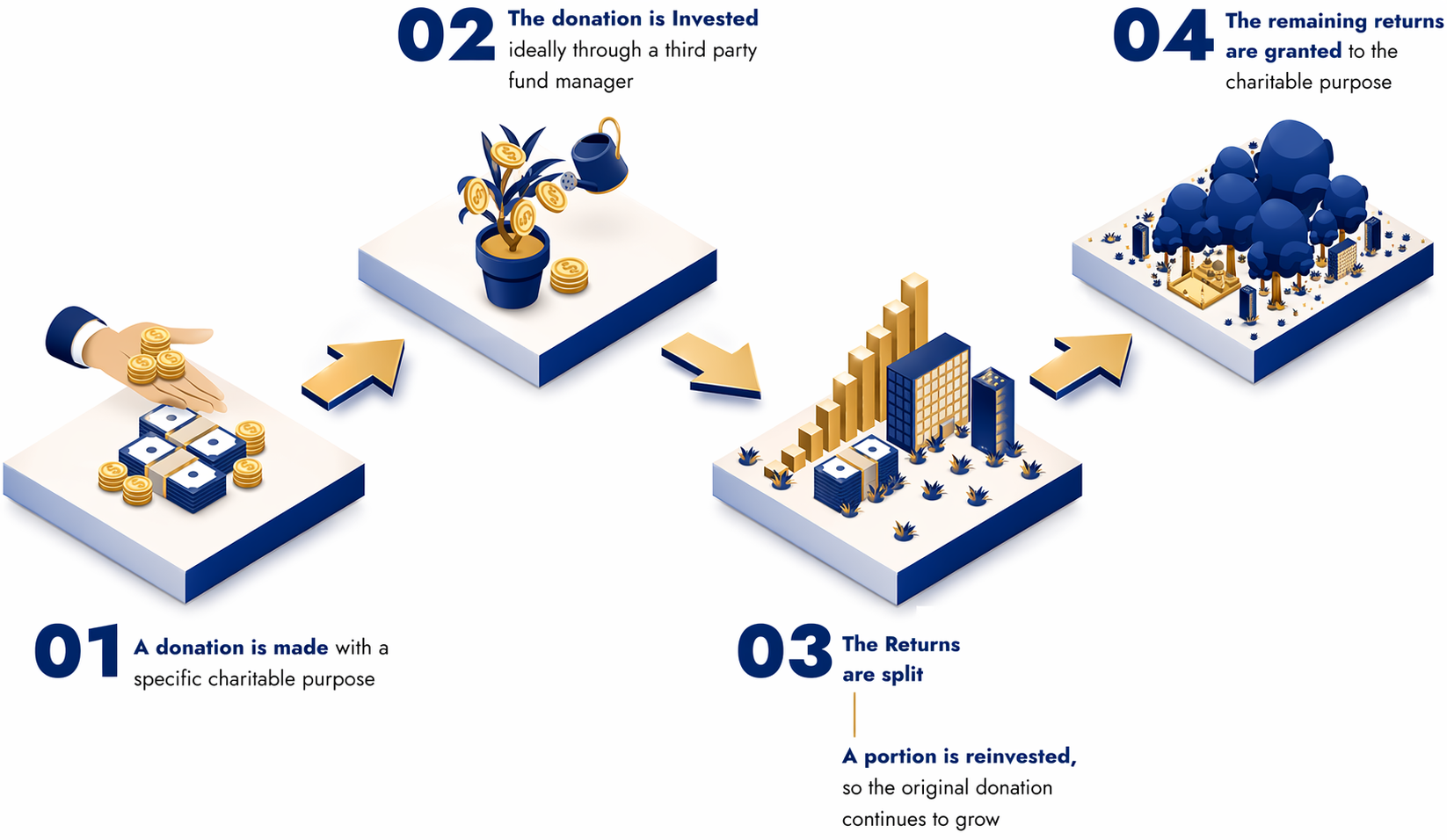
A waqf (plural: awqaf) is a permanent charitable endowment under Islamic law, in which assets—such as property, investments, or cash—are donated or set aside for religious, educational, or social purposes. These assets are preserved and managed so that their benefits continue to serve the community indefinitely. The original capital remains intact, while the returns are used to fund initiatives that uplift society and fulfill the donor’s charitable intent.
Waqf, or plural Awqaf, is a form of sadaqah jariyah—perpetual charity—that continues to benefit others long after it is given. It involves donating an asset, such as cash, property, or shares, whose returns serve the community continuously.
Rooted in The Quran and Sunnah, Waqf has historically funded mosques, schools, hospitals, and public welfare initiatives, forming the foundation of sustainable Islamic philanthropy.
Awqaf of America serves as a central hub for endowment institutions, offering regulatory support, issuing permits, and hosting educational conferences and seminars that elevate awareness and best practices in waqf management. Our work is rooted in this timeless Islamic tradition—an enduring legacy of giving that uplifts communities and strengthens the social fabric.
Every initiative we undertake is designed to drive meaningful social and environmental impact. From supporting educational institutions and healthcare initiatives to funding community development and economic empowerment projects, Awqaf of America is committed to building a resilient and prosperous future for Muslims in America.
We leverage cutting-edge investment solutions and develop innovative financial products tailored to the unique needs of the waqf sector. Our operations are guided by ethical governance, financial transparency, and a deep sense of responsibility to our stakeholders and the broader community.